Part of the Technology photoes in this website are created by rawpixel.com - www.freepik.com

CXL 2.0 / PCIe Gen 5 - The Future of Composable Infrastructure

16588

If you have been following H3 Platform, you may have seen our Falcon 5208 NVMe MR-IOV solution. The core idea of it is to increase storage utilization by leveraging SR-IOV of NVMe storage device and share the resources to multiple host machines through PCIe Gen 4 fabrics.

The architecture of this NVMe solution is illustrated as following diagram.
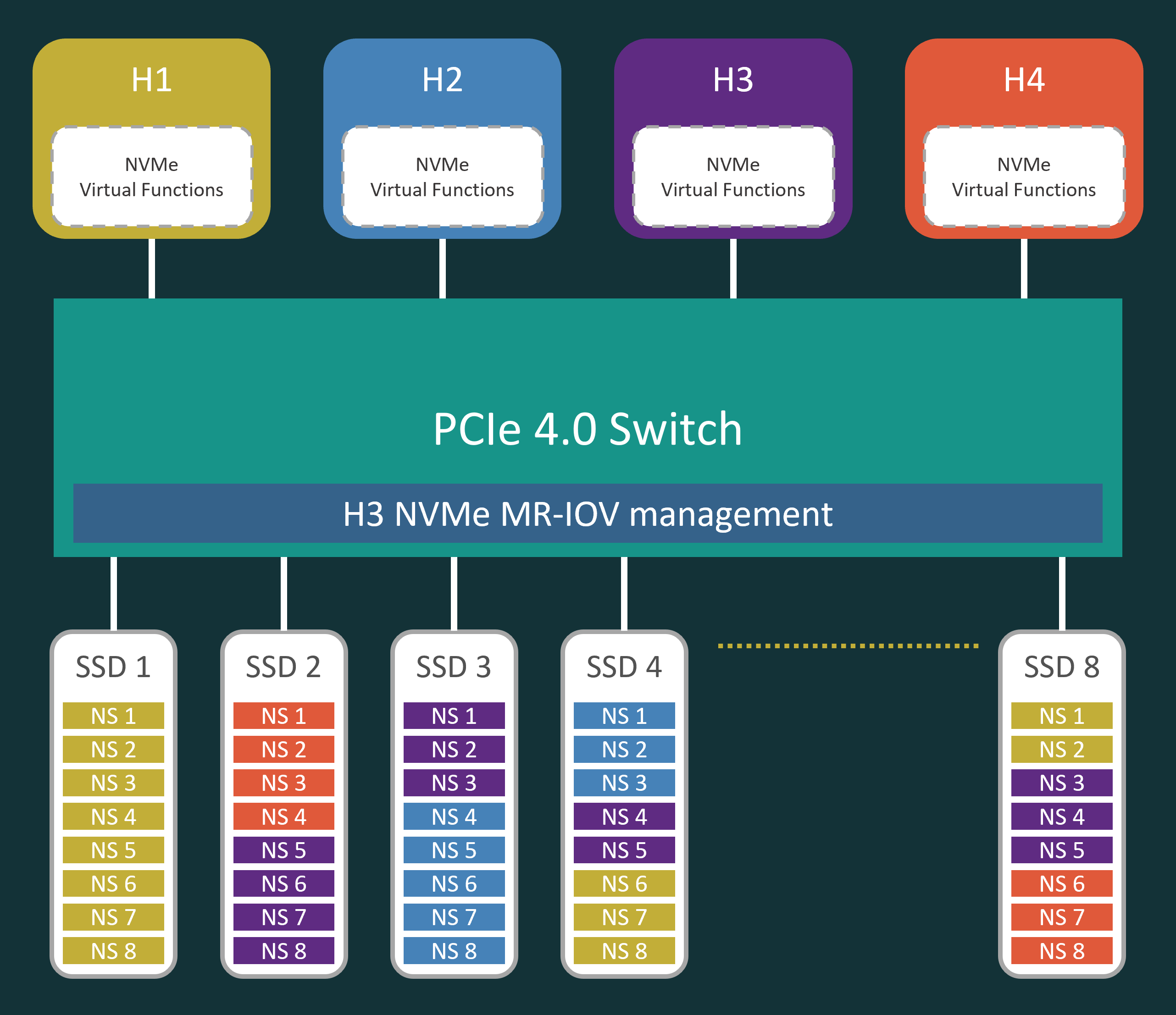

The SSDs are disaggregated from the CPU, SR-IOV of the NVMe SSDs is enabled in the Falcon NVMe chassis. This way, the storage resource is allocated into namespaces and bind to different CPU hosts through virtual functions.


Moving To CXL

Compute Express Link (CXL) was first developed by Intel, industry leaders such as AMD, Nvidia, Google...etc. soon formed a CXL Consortium to support the development. CXL is an industry-supported cache-coherent interconnect for processors, memory expansion and accelerators. It is designed to be an industry open standard interface for high-speed communications as accelerators are increasingly used to complement CPUs in support of emerging applications such as artificial intelligence and Machine Learning.
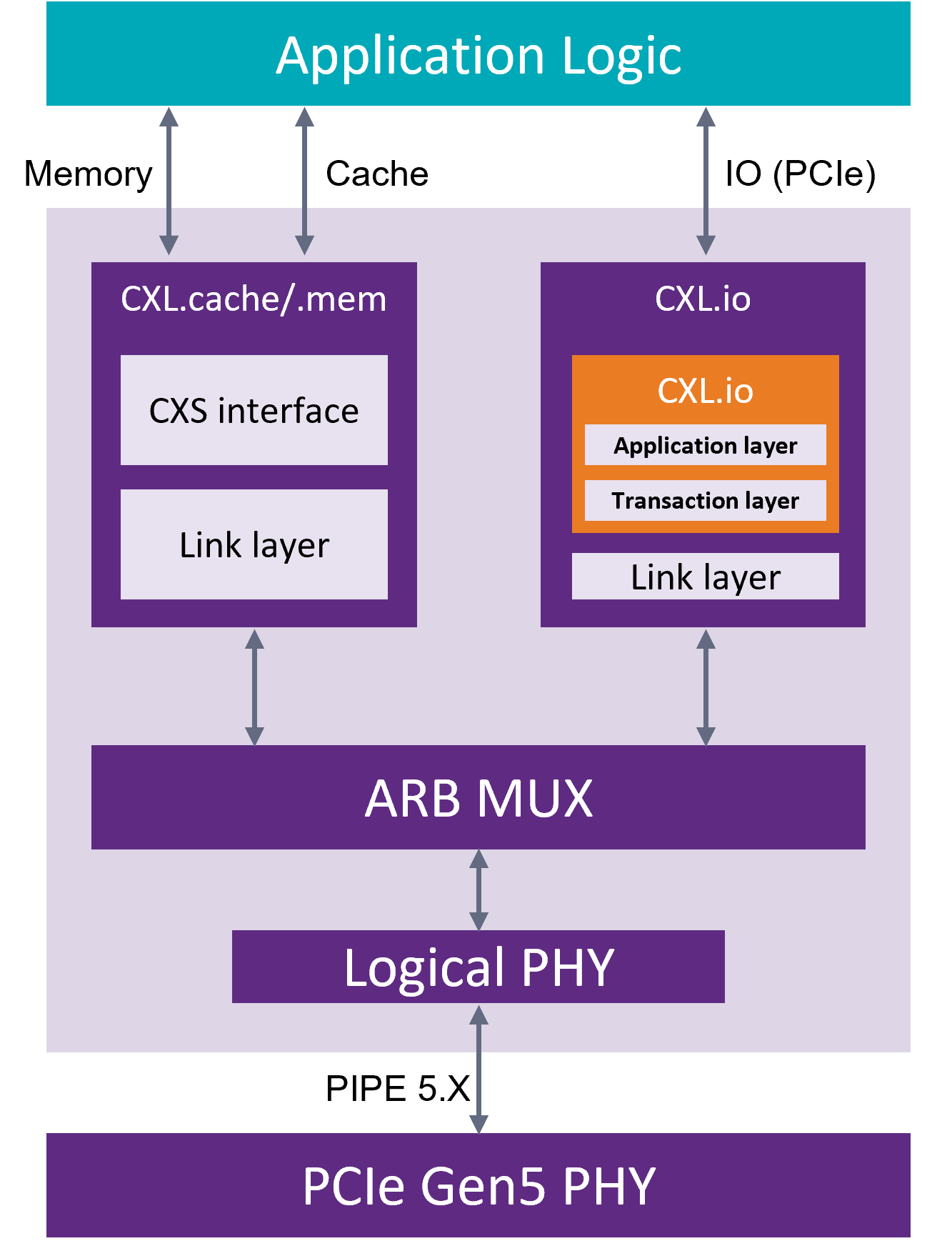
CXL specification is based on PCIe Gen 5, leverages its physical layer, allowing CPU to access shared memory on accelerator devices with a cache coherent protocol. The CXL standard defines three separate protocols: CXL.io, CXL.cache, and CXL.mem.

CXL.io: This protocol is functionally equivalent to the PCIe5.0 protocol and utilizes the broad industry adoption and familiarity of PCIe. As the foundational communication protocol, CXL.io is versatile and addresses a wide range of use cases.

CXL.cache: This protocol is designed for more specific applications, enables accelerators to efficiently access and cache host memory for optimized performance.

CXL.memory: This protocol enables a host, such as a processor, to access device-attached memory using load/store commands./p>


CXL also defines three device types, each require different combination of the three protocols.
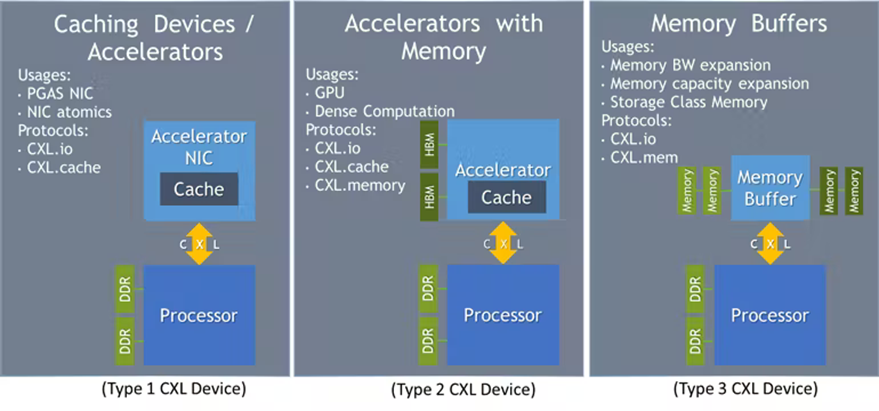

Retrieved from https://www.electronicdesign.com/technologies/embedded-revolution/article/21162617/cxl-coherency-memory-and-io-semantics-on-pcie-infrastructure


Type 1 device includes specialized accelerators (e.g., smart NIC) with no local memory. This type of devices relies on coherent access to host CPU memory. Type 2 device are general-purpose accelerators such as GPU, ASIC or FPGA with high-performance local memory. This type of devices can coherently access CPU memory and provide coherent or non-coherent access to device local memory from the host CPU.

Our focus today would be the type 3 device, the memory expansion or storage-class memory. This type of devices provides host CPU with low-latency access to local DRAM or non-volatile storage. The type 3 devices use CXL.io and CXL.mem protocols.


CXL Impact On Storage

CXL will enable storage systems to take advantage of much larger memory pools for caching. The largest DRAM cache in commercial storage system is about 3TB, the Intel Optane Persistent Memory can extend that to 4.5 TB in some software-defined storage. CXL enables memory pool expansion by allowing storage software to cache data across multiple storage media, resulting in a higher read cache hit rate.

CXL 2.0 is the real game changer. Compared to CXL 1.0 and 1.1, CXL 2.0 introduces switching and pooling capability to the CXL protocol, this new specs are significant to disaggregation and composability of memory. With CXL switching, CXL devices can be bind and unbind to different host machines easily. The concept of our CXL storage system is quite similar to our Falcon NVMe MR-IOV solution which is introduced in the very beginning of this blog, but with larger bandwidth, lower latency, and with cache coherency.
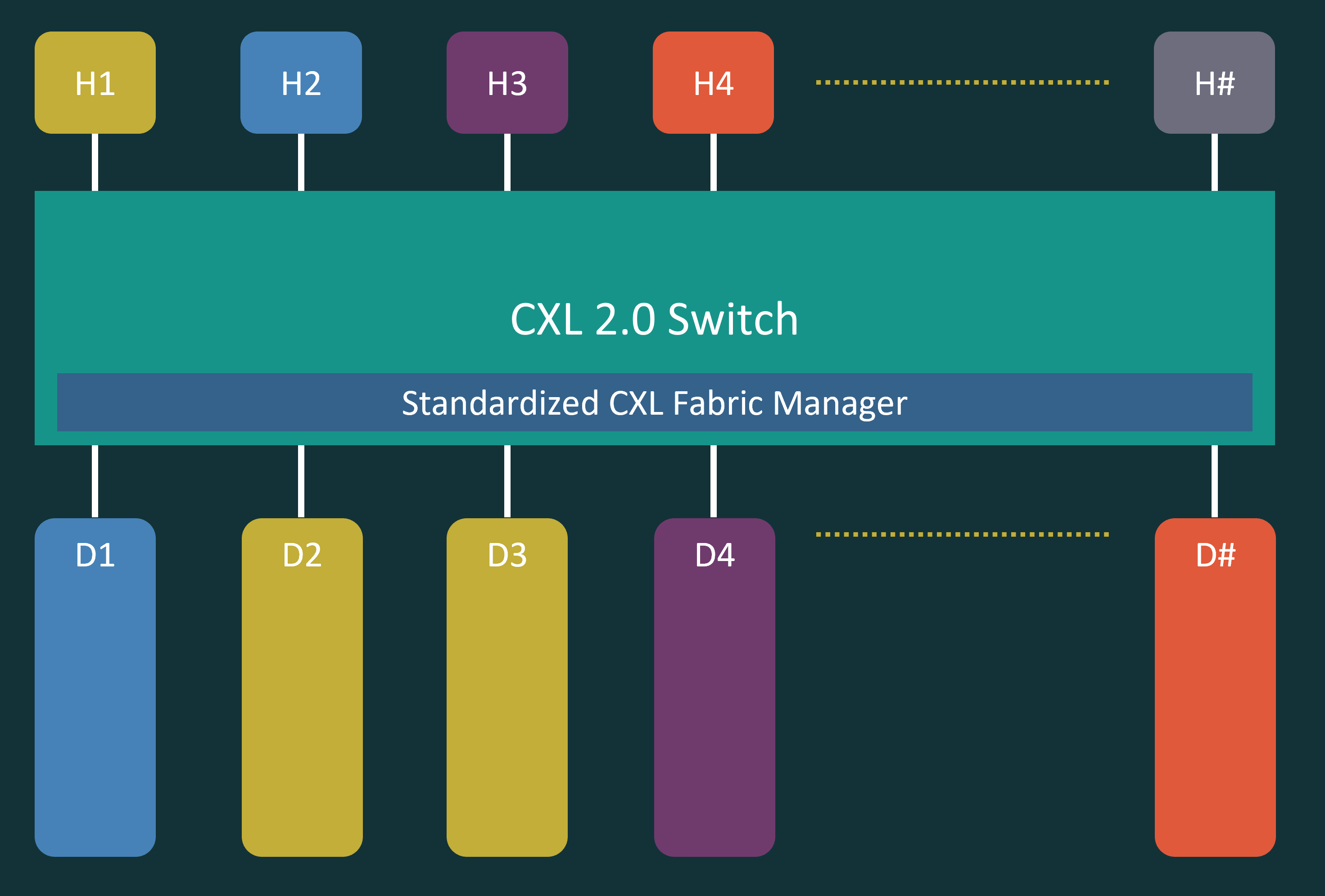


CXL2.0 Composable Memory Solution 

The switching capability in CXL 2.0 allows a multiple logic device (MLD) to be shared among multiple hosts. Putting these CXL 2.0 capabilities side by side with our Falcon 5208 NVMe MR-IOV solution, you would realize even more similarities between the two.
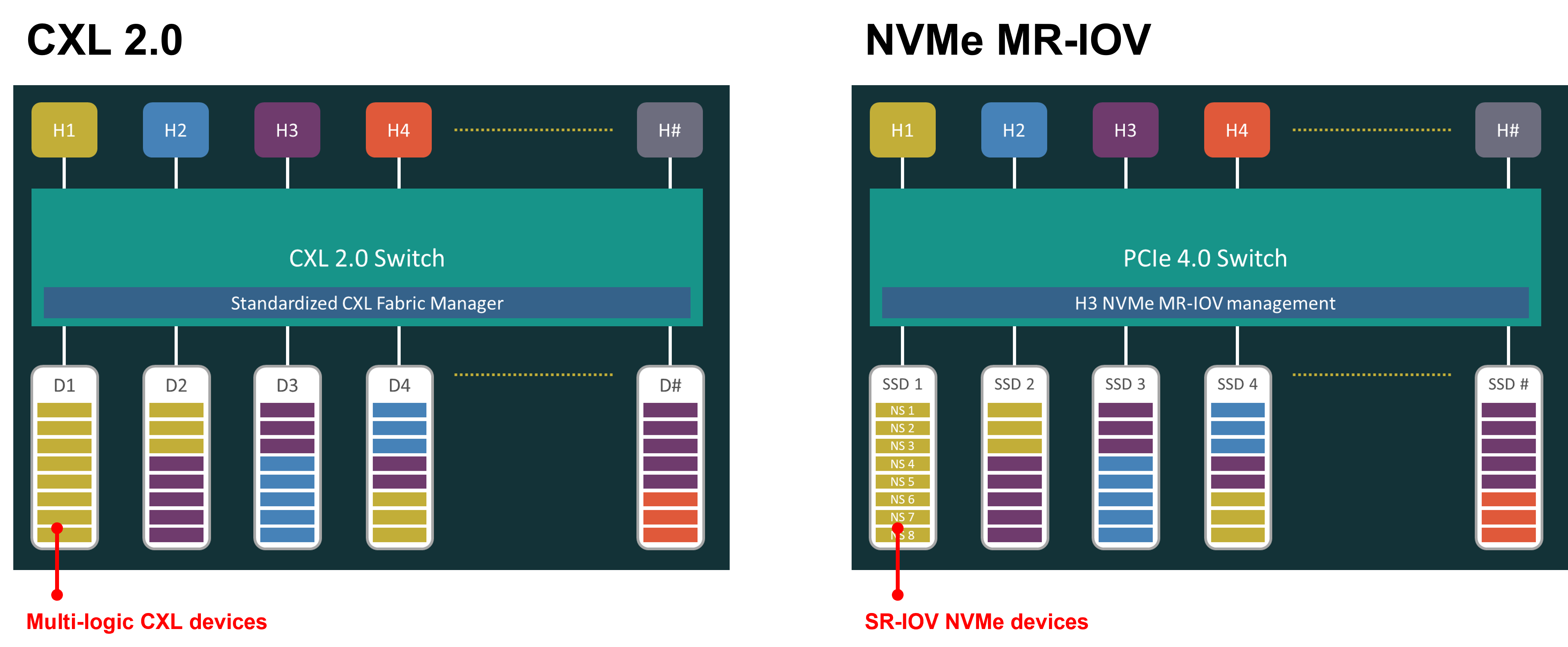

The H3 PCIe device management software servers pretty much the same function as the fabric manager in CXL 2.0. The fabric manager helps users to configure the devices, binding and unbinding resources to the hosts without interrupting ongoing applications.

Our storage expansion solution is currently based on PCIe Gen 4 and NVMe. However, in PCIe Gen5, CXL provides more possibility with higher bandwidth and lower latency. Not only storages, but also accelerators can be connected through CXL protocols, giving wide variety of peripheral resource pooling.

Compared to PCIe, CXL assures cache coherency between host CPUs and devices. Cache coherency improves compute efficiency in multi-processor environment. As the cached data being coherent, it eliminates much time and effort for the system to synchronize data between processors. The cache coherency would be the biggest advantage for future CXL device virtualization and multi-root applications, perhaps multi-root share of single-root IO virtualization using CXL protocols.

A composable CXL solution would have cache data being coherent between any CPU and peripheral devices of user’s choice. Also, the location of peripheral devices becomes less significant within rack level, enabling more efficient way for resources disaggregation.
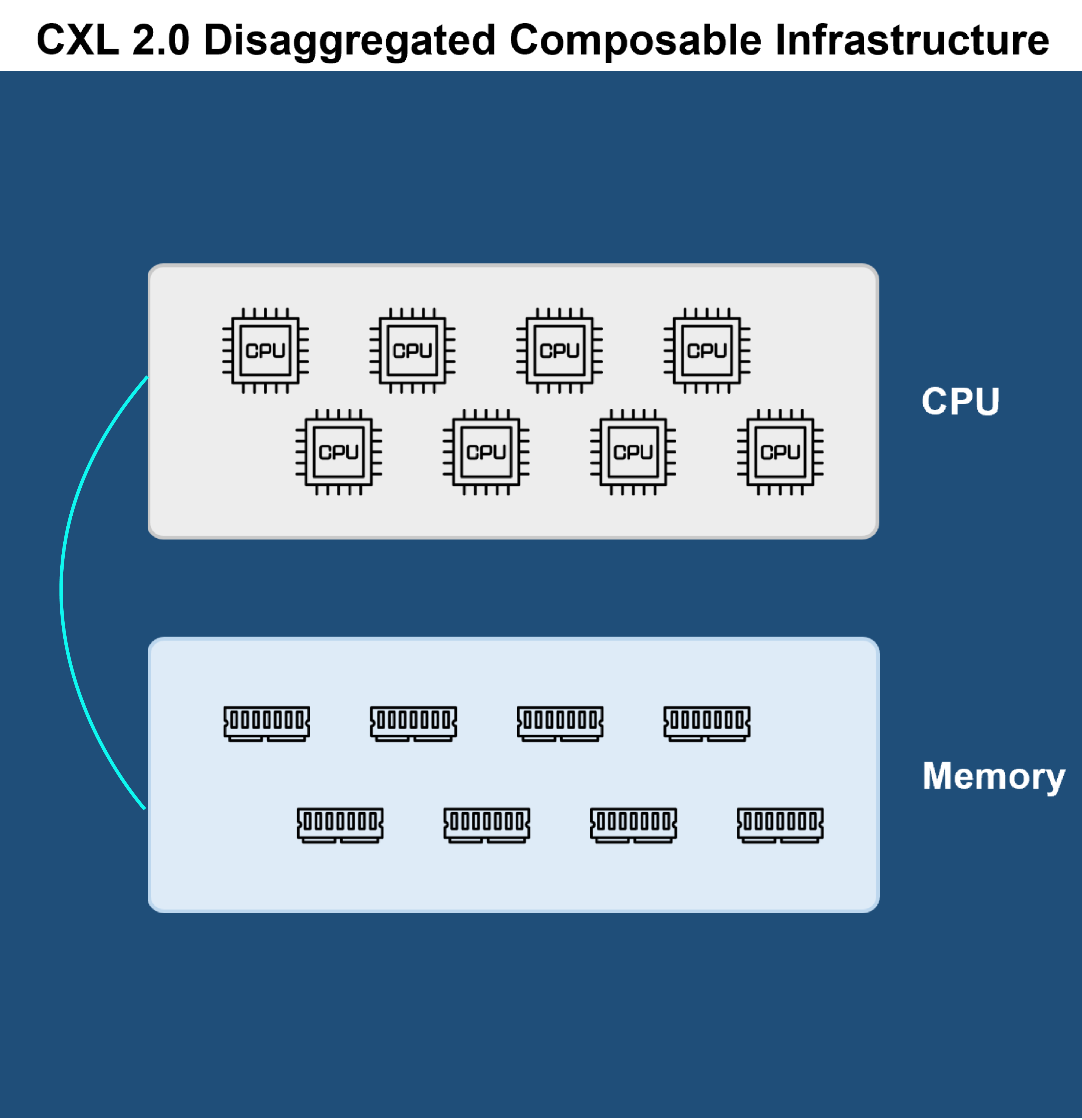
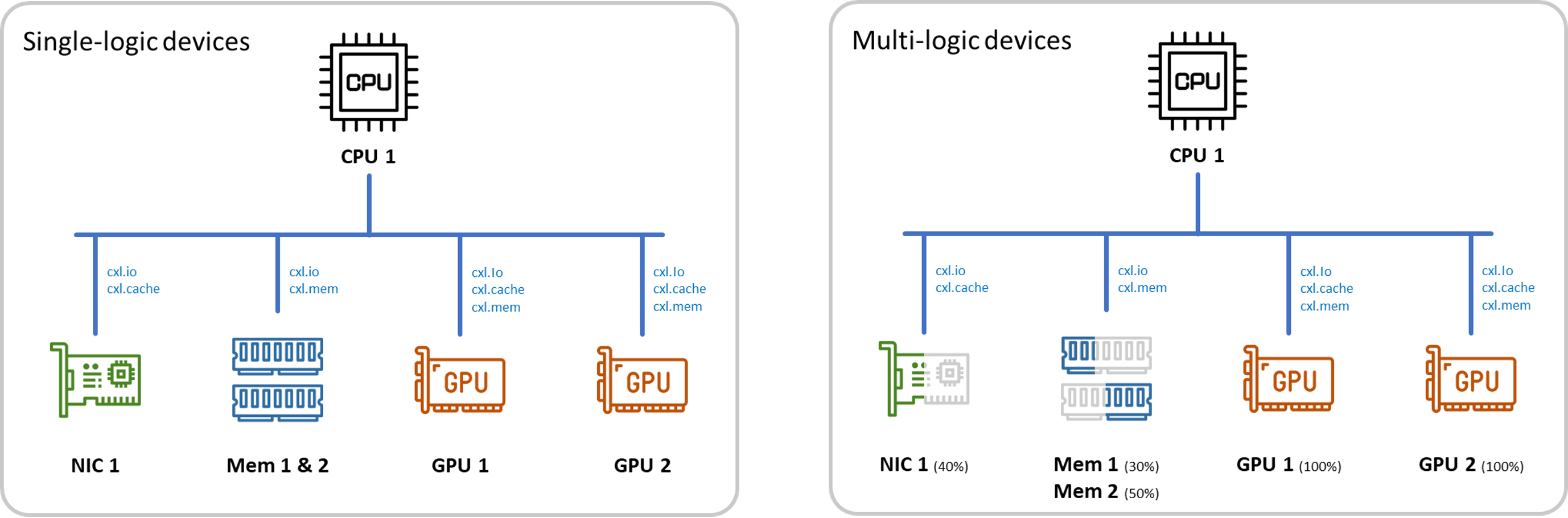


CXL, being the next generation high-speed interconnect standard, perfectly aligns with H3 Platform’s product vision. With the past experience in PCIe switch, we are confident to incorporate CXL into our composable solutions in the future.


References:

https://www.rambus.com/blogs/compute-express-link/

https://www.techtarget.com/searchstorage/tip/How-the-CXL-interconnect-will-affect-enterprise-storage


修正document.querySelector('link[rel="canonical"]').href = url_now; setCanonical('https://www.h3platform.com/blog-detail/' + reserved_para); } if (blogNum == "0") { if (para_id == "26") { setTD("NVMe MR-IOV - Lower TCO of IT System|H3 Platform", " Falcon 5208 NVMe MR-IOV solution ensures SSD performance and flexibility,. With built-in PCIe fabric, it requires less hardware to achieve high-performance storage service in comparison to other NVMe-oF solutions. An MR-IOV solution also allows better utilization of expensive CPUs especially in virtual environments."); } else if (para_id == "29") { setTD("【CXL Storage】 CXL 2.0 / PCIe Gen 5 - The Future of Composable Infrastructure|H3 Platform", "H3 Platform has NVMe MR-IOV solution, increasing storage utilization. SR-IOV of the NVMe SSDs is enabled in the NVMe chassis. CXL device are general-purpose accelerators such as NIC and GPU. CXL specification is based on PCIe Gen 5, and CXL allows CPU to access shared memory on accelerator devices. Nowadays, CXL 2.0 introduces pooling capability to the CXL protocol, improving the composability of memory."); } else if (para_id == "30") { setTD("【PCIe Expansion Chassis】– Big Accelerator Memory-Enhancing GPU and Storage Efficiency with PCIe Expansion Solution|H3 Platform", "Nvidia recently released a report on the effectiveness of Big Accelerator Memory (BaM) architecture. BaM leverages GPUDirect RDMA, allowing GPU thread to communicate with SSDs using NVMe queues to ultimately reduce reliance on CPU."); } else if (para_id == "36") { setTD("【CXL memory expansion】– Memory Expansion for Breakthrough Performance|H3 Platform", "CXL memory have been widely discussed for its capability to enhance memory bandwidth and capacity, and these benefits are significant to the emerging AI/ML applications. "); } else if (para_id == "40") { setTD("Toward PCIe Gen 5 Composable Infrastructure as a Service|H3 Platform", "The two case examples above indicate H3's capability to realize device pooling potential and expand resource configuration flexibility. That might be why SC 22 invites H3 to share experiences in the panel session. H3 is ready for everything @SC22. We look forward to displaying H3's avant-garde PCIe Gen 5 CIaaS worldwide."); } else { setTD(strT); } setInternalLink(document.querySelector("div.editor-content"), { href: "/product-list/10", anchor: array_gpuchassis[urlID % array_gpuchassis.length] }, { href: "/product", anchor: array_product[urlID % array_product.length] }); setArticleSchema(); document.querySelectorAll("ul.breadcrumb a")[1].href = "https://www.h3platform.com/blog-list?category=10"; document.querySelectorAll("ul.breadcrumb a")[2].innerHTML = document.querySelector(".title-container h1").innerText; document.querySelectorAll("ul.breadcrumb a")[2].href = url_now; document.querySelectorAll("ul.breadcrumb a")[2].style.color = "#808285"; } else if (blogNum == "1") { if (para_id == "24") { setTD("Increase the Efficiency of Storage System with Multi-host NVMe SR-IOV solution|H3 Platform", "NVMe SR-IOV is the solution for NVMe SSD sharing the resource among multiple servers often limits SSD’s performance as the networking creates I/O bottleneck."); } else if (para_id == "25") { setTD("NVMe MR-IOV – High-Performance Storage Solution for Virtual Environment Deployments|H3 Platform", "Multi-host NVMe SR-IOV, or multi-root SR-IOV (MR-IOV) is the solution aims to improve SSD performance under virtual environments while ensuring high utilization and flexibility for the storage resources. H3 Platform's proposed MR-IOV solution extends the application of SR-IOV."); } else if (para_id == "50") { setTD("【PCIe Gen 5 NVMe chassis】PCIe Gen 5 NVMe MRIOV Solution for Storage Scalability|H3 Platform", "NVMe, a new generation of high-speed storage interface, has higher bandwidth and lower latency than the traditional SATA interface. NVMe Multi-Root IO Virtualization technology (NVMe MR-IOV) further scales up the NVMe resources to realize mass storage sharing and virtualization by allowing multiple virtual machines to visit the same pool of NVMe devices at the same time."); } else { setTD(strT); } setInternalLink(document.querySelector("div.editor-content"), { href: "/product-list/17", anchor: "NVMe MR-IOV Solution" }, { href: "/product", anchor: "Composable NVMe SSD" }); setArticleSchema(); document.querySelectorAll("ul.breadcrumb a")[1].href = "https://www.h3platform.com/blog-list?category=11"; document.querySelectorAll("ul.breadcrumb a")[2].innerHTML = document.querySelector(".title-container h1").innerText; document.querySelectorAll("ul.breadcrumb a")[2].href = url_now; document.querySelectorAll("ul.breadcrumb a")[2].style.color = "#808285"; } else if (blogNum == "2") { setTD(strT); setInternalLink(document.querySelector("div.editor-content"), { href: "/product-list/17", anchor: "NVMe MR-IOV Solution" }, { href: "/product", anchor: "Composable NVMe SSD" }); setArticleSchema(); document.querySelectorAll("ul.breadcrumb a")[1].href = "https://www.h3platform.com/blog-list?category=12"; document.querySelectorAll("ul.breadcrumb a")[2].innerHTML = document.querySelector(".title-container h1").innerText; document.querySelectorAll("ul.breadcrumb a")[2].href = url_now; document.querySelectorAll("ul.breadcrumb a")[2].style.color = "#808285"; } else if (blogNum == "3") { if (para_id == "73") { setTD("Composable Memory System: 210M IOPS, Reduce Bottlenecks|H3 Platform", "Composable memory systems deliver up to 210 million IOPS and remove memory bottlenecks using CXL. Features include dynamic memory pooling, real-time allocation, and improved resource use—helping data centers scale faster while reducing TCO."); } else if (para_id == "72") { setTD("CXL 2.0 Memory Pooling Breakthrough|Four Servers Sharing 2TB Achieve 210M IOPS and 120GB/s Bandwidth|H3 Platform", "Discover H3 Platform's latest advancement in CXL 2.0 memory pooling and memory sharing technology, enabling four servers to share 2TB of memory. Key highlights include achieving 210 million IOPS and 120GB/s bandwidth, significantly enhancing data access speeds and system performance. Explore the detailed test environment, methodologies, and results that showcase this innovative leap in server memory management."); } else if (para_id == "68") { setTD("What is CXL Memory Sharing? Unlocking Shared Memory for AI and HPC|H3 Platform", "Learn how CXL memory sharing is revolutionizing computing with enhanced scalability and efficiency. This blog dives into CXL shared memory, its applications in AI and HPC, and how it transforms disaggregated memory architecture. Explore CXL technologies, protocols, and their role in creating resilient memory management systems for distributed environments. Discover why CXL memory is the future of high-performance computing and data processing."); document.querySelector("main#blog-content img.cover").alt = document.querySelector("div.title-container h1").textContent; } else { setTD(strT); } setInternalLink(document.querySelector("div.editor-content"), { href: "/product-list/18", anchor: "CXL Memory Pooling Solution" }, { href: "/blog-detail/68", anchor: "CXL Memory Sharing Architecture" }); setArticleSchema(); document.querySelectorAll("ul.breadcrumb a")[1].href = "https://www.h3platform.com/blog-list?category=14"; document.querySelectorAll("ul.breadcrumb a")[2].innerHTML = document.querySelector(".title-container h1").innerText; document.querySelectorAll("ul.breadcrumb a")[2].href = url_now; document.querySelectorAll("ul.breadcrumb a")[2].style.color = "#808285"; } else if (blogNum == "4") { // 2025-1208 setTD(strT); /* setInternalLink(document.querySelector("div.editor-content"), { href: "/blog-detail/77", anchor: "AI Storage Fundamentals" }); */ setArticleSchema(); document.querySelectorAll("ul.breadcrumb a")[1].href = "https://www.h3platform.com/blog-list?category=15"; document.querySelectorAll("ul.breadcrumb a")[2].innerHTML = document.querySelector(".title-container h1").innerText; document.querySelectorAll("ul.breadcrumb a")[2].href = url_now; document.querySelectorAll("ul.breadcrumb a")[2].style.color = "#808285"; if (para_id == "77") { setFAQSchema(); } } var breads = [{ href: "/", anchor: "H3 Platform" }, { href: "/blog-list", anchor: "Blog" }, { href: url_now, anchor: document.querySelector(".title-container h1").innerText }]; setBreadCrumbSchema(breads); setSocialMediaMeta({ cond: "meta[property='og:title']", cont: strT }, { cond: "meta[property='og:url']", cont: url_now }, { cond: "meta[property='og:description']", cont: strD }); createTag("meta", { name: "thumbnail", content: document.querySelector("img.cover").src }); function checkData(obj) { for (var i = 0; i < obj.group.length; i++) { if (obj.group[i].blogID.includes(para_id)) { return i; } } } function setTD() { var metaTitle = document.querySelector("title"); var metaDes = document.querySelector("meta[name='description']"); if (arguments.length > 1) { if (!metaDes) { var des = document.createElement("meta"); des.name = "description"; document.getElementsByTagName("head")[0].appendChild(des); des.content = arguments[1]; } else { metaDes.content = arguments[1]; } metaTitle.innerHTML = arguments[0]; } else { metaTitle.innerHTML = arguments[0]; } } function createDetailContent(target, id, content) { var real_id = "jsContent" + id; target.innerHTML = '' + target.textContent + ''; var tag_article = document.createElement("article"); tag_article.style.display = "none"; tag_article.style.textAlign = "center"; tag_article.style.marginBottom = "1em"; tag_article.id = real_id; tag_article.innerHTML = content; target.parentNode.insertBefore(tag_article, target.nextElementSibling); } function show(id) { var t = document.querySelector("article#" + id); t.style.display = (t.style.display == "none") ? "" : "none"; } function addSchema(schema) { var scriptJSON = document.createElement("script"); scriptJSON.type = 'application/ld+json'; scriptJSON.innerHTML = JSON.stringify(schema); document.getElementsByTagName("head")[0].appendChild(scriptJSON); } function extend(obj, src) { for (var key in src) { if (src.hasOwnProperty(key)) obj[key] = src[key]; } } function setBreadCrumbSchema(breadContent) { var schemaData_bread = { "@context": "http://schema.org", "@type": "BreadcrumbList", "itemListElement": [] }; var itemListElement = []; for (var i = 0; i < breadContent.length; i++) { var item = { "@type": "ListItem", "position": i + 1, "item": { "@id": breadContent[i].href, "name": breadContent[i].anchor } }; itemListElement.push(item); } extend(schemaData_bread.itemListElement, itemListElement); addSchema(schemaData_bread); } function setSocialMediaMeta() { for (var i = 0; i < arguments.length; i++) { document.querySelector(arguments[i].cond).content = arguments[i].cont; } } function createTag(tagName) { var tag_head = document.getElementsByTagName("head")[0]; var tag = document.createElement(tagName); for (var i = 1; i < arguments.length; i++) { for (attr in arguments[i]) { tag.setAttribute(attr, arguments[i][attr]); } } tag_head.appendChild(tag); } function setInternalLink(target) { var tagDiv = document.createElement("div"); tagDiv.style.marginTop = "2.5em"; tagDiv.style.textAlign = "left"; tagDiv.style.color = "#231F20"; var strLink = ""; for (var i = 1; i < arguments.length; i++) { strLink += '' + arguments[i].anchor + '|'; } tagDiv.innerHTML = 'Product Info:' + strLink.substring(0, strLink.length - 1); target.appendChild(tagDiv); } function count_url(url) { var url_to_id = 0; for (var i = 0; i < url.length; i++) { url_to_id += url.charCodeAt(i); } return url_to_id; } function getParameter(name, url) { name = name.replace(/[\[\]]/g, "\\$&"); var regex = new RegExp("[?&]" + name + "(=([^&#]*)|&|#|$)"); var results = regex.exec(url); if (!results) { return null; } if (!results[2]) { return ' '; } return decodeURIComponent(results[2].replace(/\+/g, " ")); } function setCanonical(url_path){ var canonical_check = document.querySelector("link[rel=canonical]"); if(!canonical_check){ var link_seo = document.createElement("link"); link_seo.rel = "canonical"; link_seo.href = url_path; var head_place = document.getElementsByTagName("head")[0]; head_place.appendChild(link_seo); } else{ canonical_check.href = url_path; } } function setArticleSchema() { var imgElem = document.querySelector("div.editor-content img"); var imgUrl = imgElem ? imgElem.src : "https://www.h3platform.com/img/blog/blog-banner.jpg"; var timeText = document.querySelector("time").textContent.trim(); var PublishDate = formatDateToISO(timeText); var schemaData_Article = { "@context": "https://schema.org", "@type": "Article", "headline": document.querySelector(".title-container h1").innerText, "image": imgUrl, "datePublished": PublishDate, "author": { "@type": "Organization", "name": "H3 Platform", "url": "https://www.h3platform.com/about" }, "publisher": { "@type": "Organization", "name": "H3 Platform", "logo": { "@type": "ImageObject", "url": "https://www.h3platform.com/img/logo.png" } }, "description": document.querySelector("div.editor-content").innerText.substring(0, 300) + " ..." }; addSchema(schemaData_Article); } function formatDateToISO(timeText) { var dateObj = new Date(timeText); var yyyy = dateObj.getFullYear(); var mm = String(dateObj.getMonth() + 1).padStart(2, '0'); var dd = String(dateObj.getDate()).padStart(2, '0'); var fixedTime = "09:00:00"; var timezone = "+08:00"; return `${yyyy}-${mm}-${dd}T${fixedTime}${timezone}`; } function setFAQSchema() { var schemaData_FAQ = { "@context": "http://schema.org", "@type": "FAQPage", "mainEntity": [] }; var questionList = []; for (var i = 0; i < document.querySelectorAll(".FAQ_Schema_Q").length; i++) { var item = { "@type": "Question", "name": document.querySelectorAll(".FAQ_Schema_Q")[i].textContent.trim(), "acceptedAnswer": { "@type": "Answer", "text": document.querySelectorAll(".FAQ_Schema_A")[i].textContent.trim() } }; questionList.push(item); } extend(schemaData_FAQ.mainEntity, questionList); addSchema(schemaData_FAQ); }